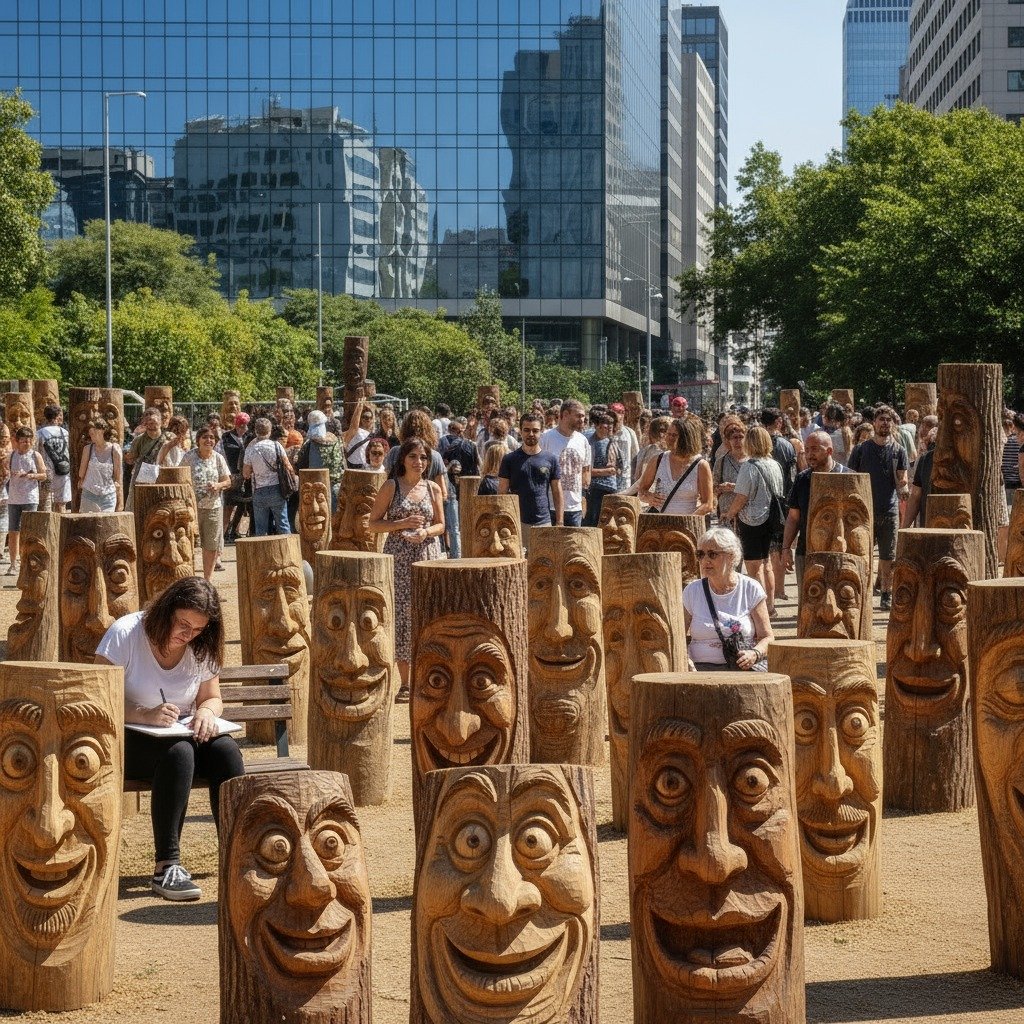
In recent years, one unusual yet captivating word has drifted into the creative conversation—Caricatronchi. While it might sound quirky or unfamiliar, it has quickly become a fascinating term used to describe a fresh artistic movement that blends humor, emotion, and imagination in an entirely new way. The rise of Caricatronchi isn’t accidental; it reflects a broader shift in how people use visual storytelling to express identity, irony, and authenticity in a digital-first world.
At its core, Caricatronchi represents a playful collision between caricature and technology—an artistic language that thrives on exaggeration, personality, and experimentation. It gives room for creators to stretch boundaries without losing humanity in the process. As we explore it more closely, we’ll look at where Caricatronchi came from, what it really means, and why it resonates with so many artists, designers, and audiences today.
By the time you finish reading, you’ll understand not only what Caricatronchi is but also how it connects to larger cultural forces shaping art, creativity, and communication in the twenty‑first century.
The Origins And Meaning Behind Caricatronchi
The word Caricatronchi appears to draw inspiration from two main ideas: caricature, meaning a deliberately exaggerated depiction of a person or thing, and tronchi, an Italian root that can refer to “trunks” or “stumps,” implying something roughly cut or humorously incomplete. The fusion produces an expression that feels both comical and oddly human—something that doesn’t take itself too seriously, yet still carries emotion.
While there is no single origin story pinpointing exactly when the Caricatronchi aesthetic began, its spirit has long existed in creative experiments that blur oddness and beauty. Artists in the late 20th century who toyed with distorted faces, surreal humor, and exaggerated scaling paved the way for this concept, though the term itself surfaced more recently as internet communities began celebrating “beautifully awkward” art forms.
Today, Caricatronchi stands as a metaphor for modern creativity: imperfect, bold, and self‑aware. It’s rooted in the freedom to make mistakes and turn them into originality. In cultural terms, it captures the growing appetite for realness—art that winks at its own flaws while drawing its power precisely from them. Rather than polishing every detail, Caricatronchi invites people to celebrate the delightful messiness that defines being human.
How Caricatronchi Is Influencing Modern Art And Design
Contemporary art no longer divides strictly between traditional and digital, serious and humorous. Within this fluid environment, Caricatronchi emerges as an approach to designing visuals that feel spontaneous and real. Creators are using it to challenge perfectionism—the pressure to look flawless in visual media—by emphasizing texture, distortion, and exaggerated emotion.
Designers experimenting with Caricatronchi might twist proportions, amplify facial features, or combine contrasting elements of form and color. Instead of graceful symmetry, they embrace vibrant imbalance. Instead of smooth gradients, they prefer rough edges or naive simplicity that reminds us of doodles from childhood. This deliberate imperfection produces a dynamic energy—something alive.
In fashion and advertising, Caricatronchi elements appear in bold campaigns that reject airbrushed ideals, opting instead for quirky illustrations or hand‑drawn typography. Graphic designers use exaggerated lines and warm, unpolished color tones to invoke humor and warmth. Even architecture and product design have adopted Caricatronchi sensibilities, crafting objects that are slightly skewed, playful, and emotionally engaging.
At its essence, Caricatronchi re‑centers creativity around personality. It’s not about achieving technical precision but about connecting through honesty and surprise. That ethos explains why it is increasingly visible in art schools, digital design platforms, and independent media circles around the world.
The Cultural Impact Of Caricatronchi In The Digital Age
The digital landscape has proved fertile ground for Caricatronchi’s rise. Social platforms like Instagram, TikTok, and Pinterest thrive on visual identity, and the Caricatronchi style—expressive, bold, and unmistakably individual—fits naturally into that space. One strong reason people share and respond to such content is its ability to feel human amid the sleek uniformity of mass‑produced imagery online.
Through memes, short animations, and digital illustrations, creators infuse Caricatronchi into social storytelling. Often, these works carry subtle commentary about daily life, mental health, or consumer culture, presented through exaggerated humor rather than direct realism. The approach gives people permission to laugh at imperfection, fostering relatability and emotional honesty.
From a social standpoint, communities celebrating this style have turned it into a language of connection. Fans create hashtags, remix each other’s works, and co‑create large collaborative pieces. The tone is lighthearted yet inclusive—proof that digital culture still finds its most authentic energy in shared imperfection.
Techniques And Styles That Define A True Caricatronchi Creation
Creating a Caricatronchi piece means embracing expressive freedom. Artists often begin with recognizable human or object forms, then deliberately alter proportions or exaggerate features to provoke curiosity or laughter. Faces may stretch oddly; colors might clash on purpose; digital brushes replicate traditional media to keep each stroke lively and imperfect.
Color choices within Caricatronchi works tend to favor warm, saturated tones—reds, oranges, or purples—that speak of emotion and spontaneity. The same applies to motion graphics, where abrupt transitions and jumpy rhythms maintain a sense of play. Caricatronchi art rarely hides its process; rough outlines and visible brush marks proudly remain in the final presentation.
Another signature is the balance between distortion and readability. Too much abstraction would lose personality, yet careful exaggeration keeps characters expressive. This duality—between chaos and clarity—creates the movement’s distinct charm.
Why Caricatronchi Resonates With Modern Audiences
Every artistic wave arises from emotional need. In the case of Caricatronchi, that need is authenticity wrapped in humor. We live in a time when digital filters dominate, yet people are increasingly weary of the pressure to appear flawless. The Caricatronchi attitude—celebrating the crooked smile rather than smoothing it away—speaks directly to that mood.
Audiences find comfort and laughter in Caricatronchi because it reflects their own imperfections without judgment. Its shapes and distortions mirror real‑life emotions that orderly aesthetics often suppress: awkwardness, spontaneity, sincerity. Beyond humor, it fosters emotional connection—viewers sense the artist’s hand, the unedited thought behind the image.
The Future Of Caricatronchi: Where This Creative Movement Is Headed
If Caricatronchi has evolved from obscure niche to mainstream conversation, its future lies in how it continues to blend tradition and technology. Already, new creators are experimenting with 3D modeling, augmented reality, and mixed‑media hybrids that push the Caricatronchi approach into interactive experiences. Digital installations may use motion sensors to distort perspective dynamically, while NFT artists might weave Caricatronchi’s humor into collectible visual stories.
However, growth doesn’t mean dilution. For the movement to stay genuine, its practitioners emphasize storytelling and sincerity. Whether through a sketchbook drawing or an AI‑assisted design, the goal remains emotional clarity rather than perfection.
Conclusion
Caricatronchi may have begun as a niche curiosity, but it’s quickly becoming an emblem of a deeper cultural truth: people crave imperfection that feels honest. Through funny distortions and lively exaggerations, it reintroduces warmth into an increasingly pixel‑perfect world.
For artists, the Caricatronchi spirit encourages fearless exploration. For viewers, it offers joyful relief and a sense of companionship in shared oddity. For digital communication, it represents the future—a path toward authenticity, where engagement happens not through polished surfaces but sincere expression.
In an environment guided by Google’s Helpful Content standards and SEO models prioritizing meaningful value, Caricatronchi stands as both metaphor and method. It proves that quality content—like quality art—thrives when it informs, entertains, and connects.
And perhaps that’s the final lesson Caricatronchi offers: creativity, at its very best, isn’t about perfection or predictability. It’s about embracing the authentic curve of human imagination—beautifully twisted, endlessly expressive, and unmistakably real.
FAQ’s:
What Is Caricatronchi?
Caricatronchi is a modern creative style that mixes humor, exaggeration, and emotional honesty. It celebrates imperfection through playful, expressive art and design.
Where Did The Idea Of Caricatronchi Come From?
The term blends “caricature” with an Italian root suggesting rough or incomplete forms, symbolizing art that’s intentionally imperfect yet full of personality.
Why Is Caricatronchi Becoming Popular?
People are drawn to its natural, relatable feel. In a world of polished digital images, Caricatronchi stands out for showing real human emotion.
How Is Caricatronchi Used In Modern Design?
Artists and designers apply the Caricatronchi approach in illustrations, branding, motion graphics, and even fashion—favoring irregular shapes, bold colors, and visible artistic flaws.
Is Caricatronchi Related To Digital Culture?
Absolutely. Caricatronchi thrives online thanks to social media and digital art tools, where creators share work that feels authentic and emotionally direct.
Hungry for more? Head over to my website for fresh articles.
10 Core Principles Of Aurö That Define Modern Balance And Design
Disclaimer:
This article on Caricatronchi is for informational and creative insight only. The interpretations shared reflect general understanding and should not be taken as official or professional advice.
