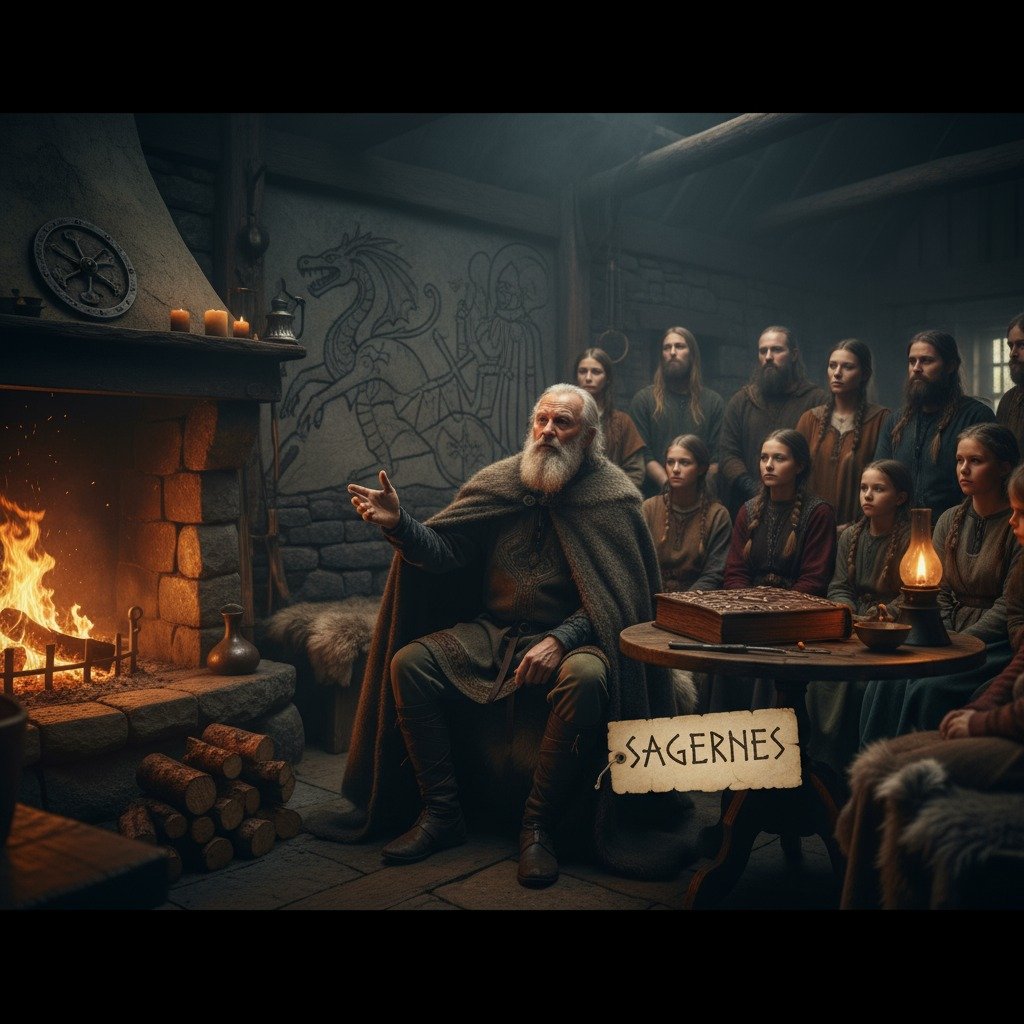
What “Sagerne” Really Means
The word sagerne comes from Scandinavian languages and simply means “the sagas” or “the stories.” It refers to the ancient narrative traditions of the Nordic and Icelandic world, where people told tales of real heroes, gods, and families who shaped early Northern Europe. These stories were passed down through generations before being written in the Middle Ages, becoming one of the world’s richest sources of myth, history, and human emotion.
The Origin Of Sagerne
The roots of sagerne reach back to the Viking Age, roughly between the 8th and 11th centuries. At that time, oral storytelling was the main way of keeping history and values alive. When Iceland became a center of literacy in the 13th century, many of these oral tales were finally written down in Old Norse. The most famous collections — such as the Íslendingasögur (Sagas of the Icelanders) — recorded not just heroic deeds but also daily life, honor, love, and revenge.
What Makes A Saga Unique
Each saga blends real events with creative storytelling. The focus is often on complex human emotions, family loyalty, conflict, and destiny.
Common elements include:
- Heroic figures who face moral or physical challenges
- Gods and mythical beings who influence human fate
- Cultural themes of honor, kinship, and justice
- Detailed landscapes showing the beauty and harshness of the North
Because of their mix of realism and myth, sagerne are seen as both historical records and works of literature.
Key Examples Of Famous Sagerne
Several sagas stand out as cornerstones of Nordic literature:
- Njáls Saga – explores friendship, loyalty, and revenge in medieval Iceland.
- Egils Saga – follows a poet-warrior known for his courage and dark humor.
- Laxdæla Saga – tells of love and tragedy within Icelandic families.
- The Saga of the Volsungs – mixes myth with heroism, inspiring later works like Wagner’s Ring Cycle.
Each of these stories reflects different parts of human nature and Nordic belief systems.
The People Behind The Stories
Although most sagas were written anonymously, historians credit scholars like Snorri Sturluson for compiling and preserving them. Snorri’s Prose Edda and Heimskringla remain vital sources for Norse mythology, describing gods such as Odin, Thor, and Loki, and explaining how humans saw the universe.
How Sagerne Were Told
Before printing existed, sagas were performed aloud during long winters. Storytellers, called skalds, were highly respected and often traveled between villages sharing tales. The rhythm, repetition, and poetic style of Old Norse helped listeners remember details. This tradition built a shared identity that united communities across Iceland, Norway, Denmark, and beyond.
The Values Hidden In Sagerne
Sagerne are not only entertainment but also moral lessons. They teach courage in hardship, loyalty to family, and acceptance of fate. They also show the early Nordic idea of balance between freedom and duty — a concept still admired today.
These stories preserved practical wisdom too: leadership, survival, law, and respect for nature. That’s why historians use them to understand early Scandinavian culture.
The Influence On Modern Culture
The legacy of sagerne reaches far beyond Scandinavia. They inspired famous authors like J.R.R. Tolkien, whose Lord of the Rings drew heavily from Norse myth. They also influence movies, video games, and TV shows such as Vikings and The Northman. Through these adaptations, the old stories live again, connecting modern audiences with ancient voices.
Myths And Misunderstandings About Sagerne
Some people think all sagerne are pure fiction, but many are based on real families and events. Others believe they were only told by men, when in fact women also played key roles as storytellers and central characters. Another common myth is that sagerne are violent tales of war — yet many focus on love, law, and personal honor.
Why Sagerne Still Matter Today
Sagerne remind us that storytelling is a form of memory and identity. They show how cultures record values, face loss, and celebrate courage. Reading them today helps people see how far human imagination and empathy reach — across time, language, and geography. Whether you study literature, history, or philosophy, sagerne remain a timeless guide to the human spirit.
Preserving The Tradition
Today, museums and universities in Iceland and Scandinavia continue to protect old manuscripts through digital archives and translation projects. Scholars and enthusiasts translate sagerne into modern languages, ensuring that anyone can read and learn from them without losing the poetic tone of the originals.
Practical Ways To Explore Sagerne
If you want to discover sagerne for yourself:
- Read translated editions from trusted publishers like Penguin Classics.
- Visit the Árni Magnússon Institute in Iceland for digital manuscripts.
- Watch documentaries on Norse storytelling traditions.
- Explore museums in Reykjavik, Oslo, and Stockholm featuring saga exhibitions.
These small steps can help anyone connect with this extraordinary cultural heritage.
Final Thoughts
Sagerne are living echoes of the Nordic past — stories that began around firelight and now travel through books and screens. They connect myth with memory, showing how humans search for meaning through words. By studying and sharing these sagas, we keep alive one of the world’s oldest storytelling traditions, built on truth, imagination, and the power of the spoken tale.
FAQ’s:
What Does “Sagerne” Mean?
It means “the sagas” or “the stories” in Danish and Norwegian, referring to traditional Nordic tales about heroes and gods.
Where Did Sagerne Come From?
They originated from Viking Age oral storytelling and were later written down in Icelandic manuscripts during the 12th–14th centuries.
Are Sagerne True Stories?
Many are based on real people and events but were shaped by myth, poetry, and symbolism.
Why Are The Sagas Important?
They preserve early Northern European culture, language, and moral values, influencing modern literature and media.
Can Anyone Read Them Today?
Yes. Modern translations make them accessible to all readers, often with historical notes for better understanding.
Hungry for more? Head over to my website for fresh articles.
Disclaimer
This article is for general informational purposes only. While the information about Sagerne is based on credible historical and cultural sources, readers should verify details through academic or official references before drawing conclusions.
